Videos
No videos (yet…)
Performances

Recordings
No recordings (yet…)
No videos (yet…)
No recordings (yet…)
Live at REDCAT, June 15, 2025
Program note by Stephen James Taylor:
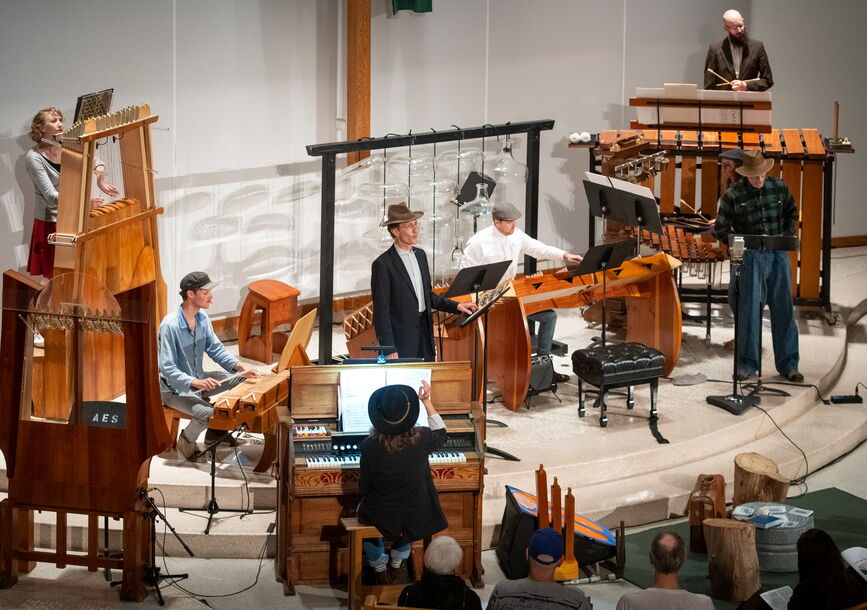
HEAVE HO is a 6-movement piece embracing the spirit of perseverance in the face of adversity. At times humorous, at times jarring, at times cinematic, the music vibrantly romps through the harmonic and melodic fields provided by the Partch instruments and tuning system. His 43-tone scale is comfortably pulled into a newly created eclectic genre: Kendrick Lamar-meets Terry Riley-meets Ringling Brothers-meets Eno-meets Zappa-meets Leadbelly-meets Partch. Go figure.
Music by Harry Partch (1901-1974)
Final two paragraph’s of Thomas Wolfe’s “God’s Lonely Man.”
Performers:
Alison Bjorkedal – Kithara I
Vicki Ray – Chromolodeon
Derek Stein – Adapted Viola
T.J. Troy – Bass Marimba and Voice
Video captured and edited by Video Angel Productions
Audio recorded by Chris Votek
Presented by Jacaranda Music Series, First Presbyterian Church, Santa Monica, CA, November 9, 2019.
No recordings (yet…)
Performed by PARTCH Ensemble at REDCAT, June 2024
Progressions
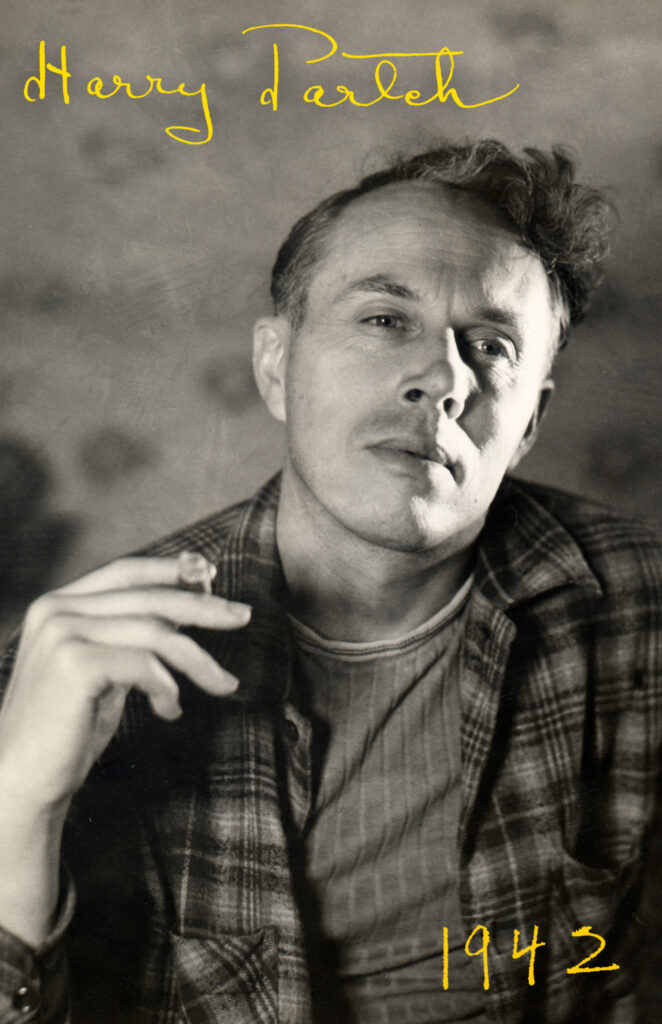
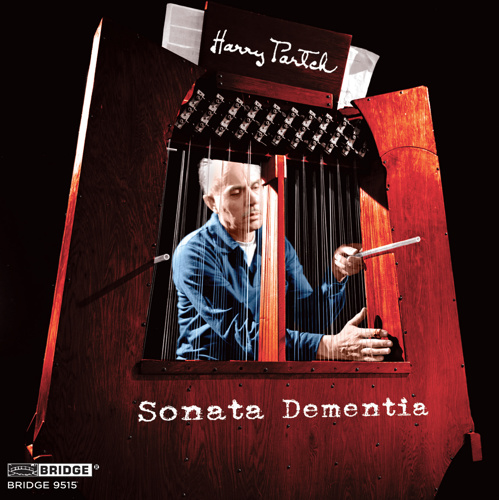
In 1942, Harry Partch gave a lecture-demonstration at the Eastman School of Music in Rochester, N.Y. After introducing the now famous 43-note/octave scale on his newly created Chromolodian (sic), he proceeded to submerse the students in an extraordinary ear-bending sequence of chord Progressions Within One Octave that even today are capable of jarring the most seasoned Modernist sensibilities. Apologizing in advance that these auditory experiments, “…afford a little vision into a new world of musical resources—hardly more than a glimpse through a keyhole,” they turned out to be a peek into the future, as this music would soon become the opening of his Sonata Dementia (1949), exquisitely orchestrated with the addition of six newly built instruments. This performance was made possible in part by a grant from the City of Los Angeles Department of Cultural Affairs.
This performance was also made possible in part by the Los Angeles County Board of Supervisors through the Department of Arts and Culture.
LIMITED EDITION: Hardbound book, 72 pages, 38 photographs
(more…)World Premiere by PARTCH Ensemble at REDCAT, June 2024
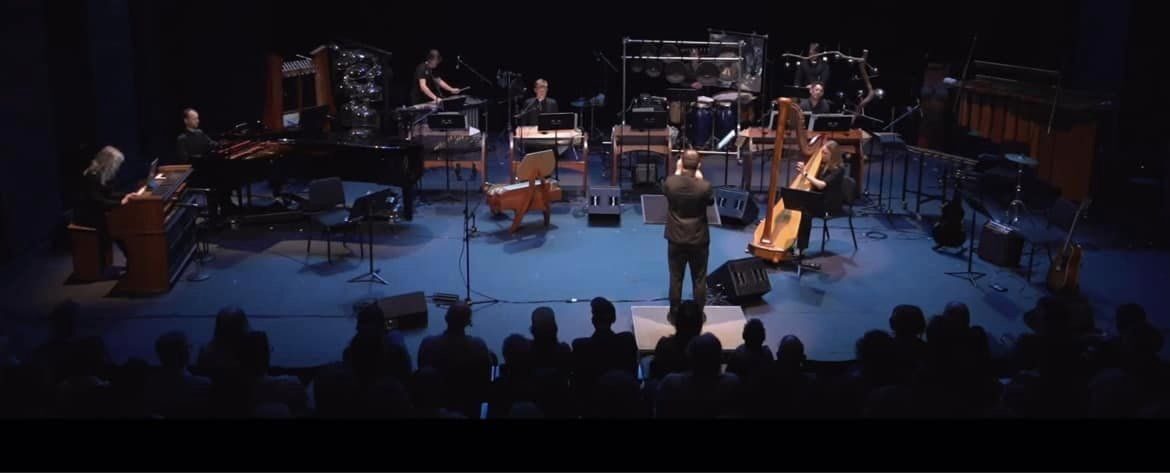
“Reið (Raidō) II is the sixth in a cycle of chamber pieces I have been composing for the last several years where each work is associated with a specific ancient Runic symbol. “Reið (Raidō)” directly translates to “ride” or “journey.” A journey on horseback is implied, but this can also be interpreted as an experience which connects this life with the afterlife, or this realm with other realms of existence or consciousness. The repetitive and percussive nature of a galloping horse is often further associated with shamanic drumming that accompanies certain primordial esoteric practices. In my work Reið (Raidō) there are 3 groupings of instruments and players, conveying three types of microtonal tunings: a Chromelodeon, tuned to a 43-note division of the octave based on ratios derived from just intonation; a piano and a harp whose standard equal temperament is tuned apart by the difference of a 7th partial of the overtone series, or approximately in equal tempered 1/6th tones; and 3 percussionists who play a variety of indefinite pitched or noise-based percussion instruments. In this dramatic representation of both an ancient and futuristic ritual, these various tunings and timbres are utilized through a carefully controlled harmonic, motivic, and formal personal language, that unifies structure and architecture with intensity and expression.”
— Jeffrey Holmes
This performance was made possible in part by a grant from the City of Los Angeles Department of Cultural Affairs.
This performance was also made possible in part by the Los Angeles County Board of Supervisors through the Department of Arts and Culture.
No recordings (yet…)
No performances (yet…)
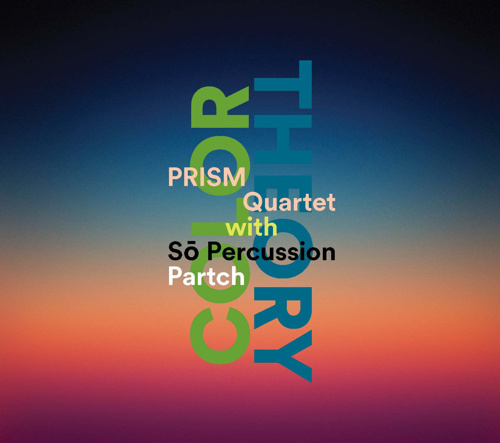
by PRISM Quartet and Sō Percussion
Music for Saxophones, Percussion and Harry Partch Instruments
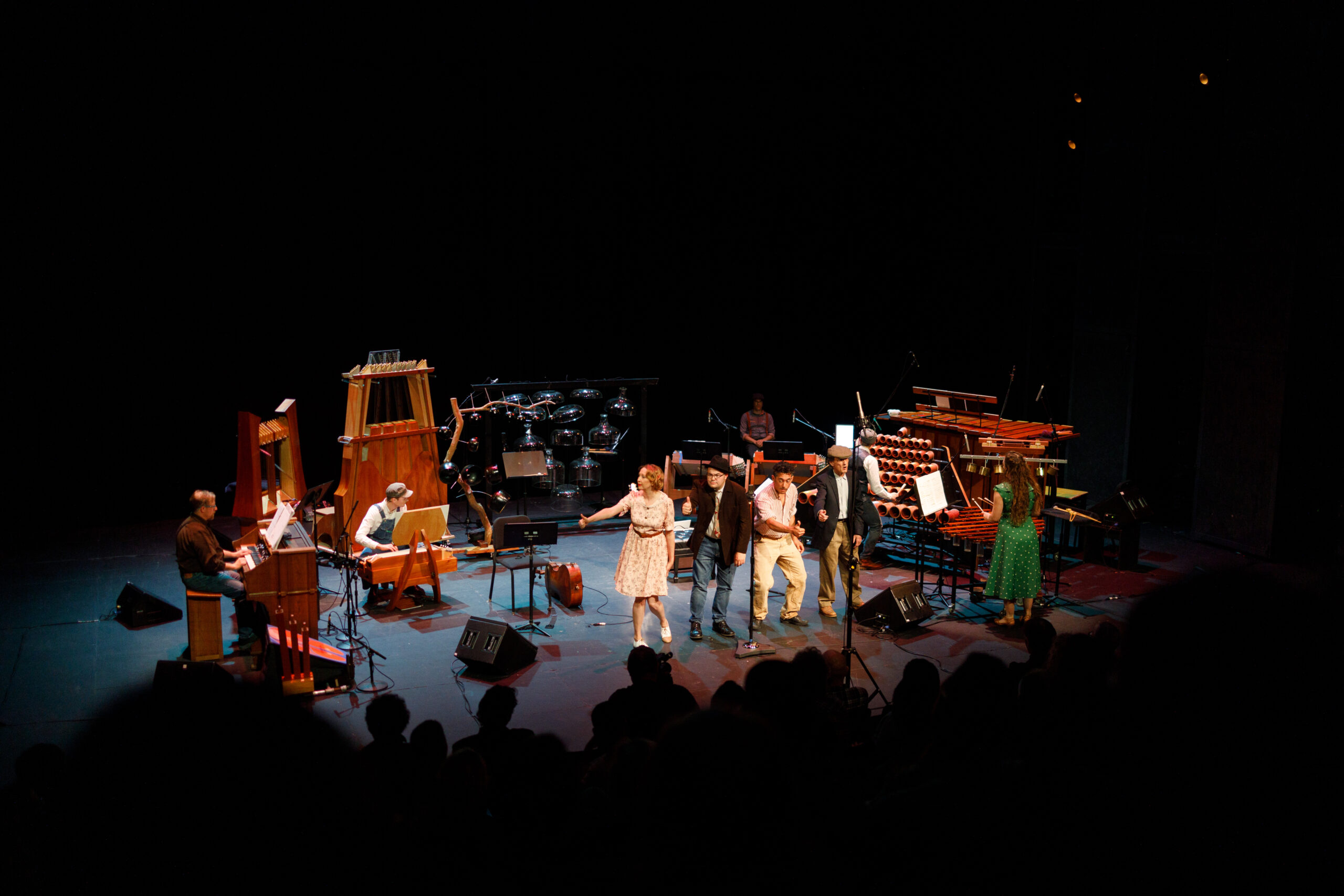
(more…)PARTCH Ensemble performing Harry Partch’s San Francisco—A setting of the cries of Two Newsboys on a Foggy Night in the Twenties at REDCAT on June 16-17, 2023.
“A collection of musical compositions based on the spoken and written words of hobos and other characters—the result of my wanderings in the Western part of the United States from 1935 to 1941.”
~ Harry Partch on The Wayward
Setting the gliding contours of real human voices had partly inspired Partch’s famed microtonal scale, and the opening viola lines of San Francisco do, in fact, wordlessly depict the curbside sales pitch with uncanny accuracy. So accurate, in fact, that when reviewing the 1944 Carnegie Hall premiere for the New York Tribune, Lou Harrison wrote, “Mr. Partch has woven a spell of about the foggiest and dampest music I have ever heard. I got homesick”.
Live at REDCAT, June 16-17, 2023
Program note by Kyle Gann:
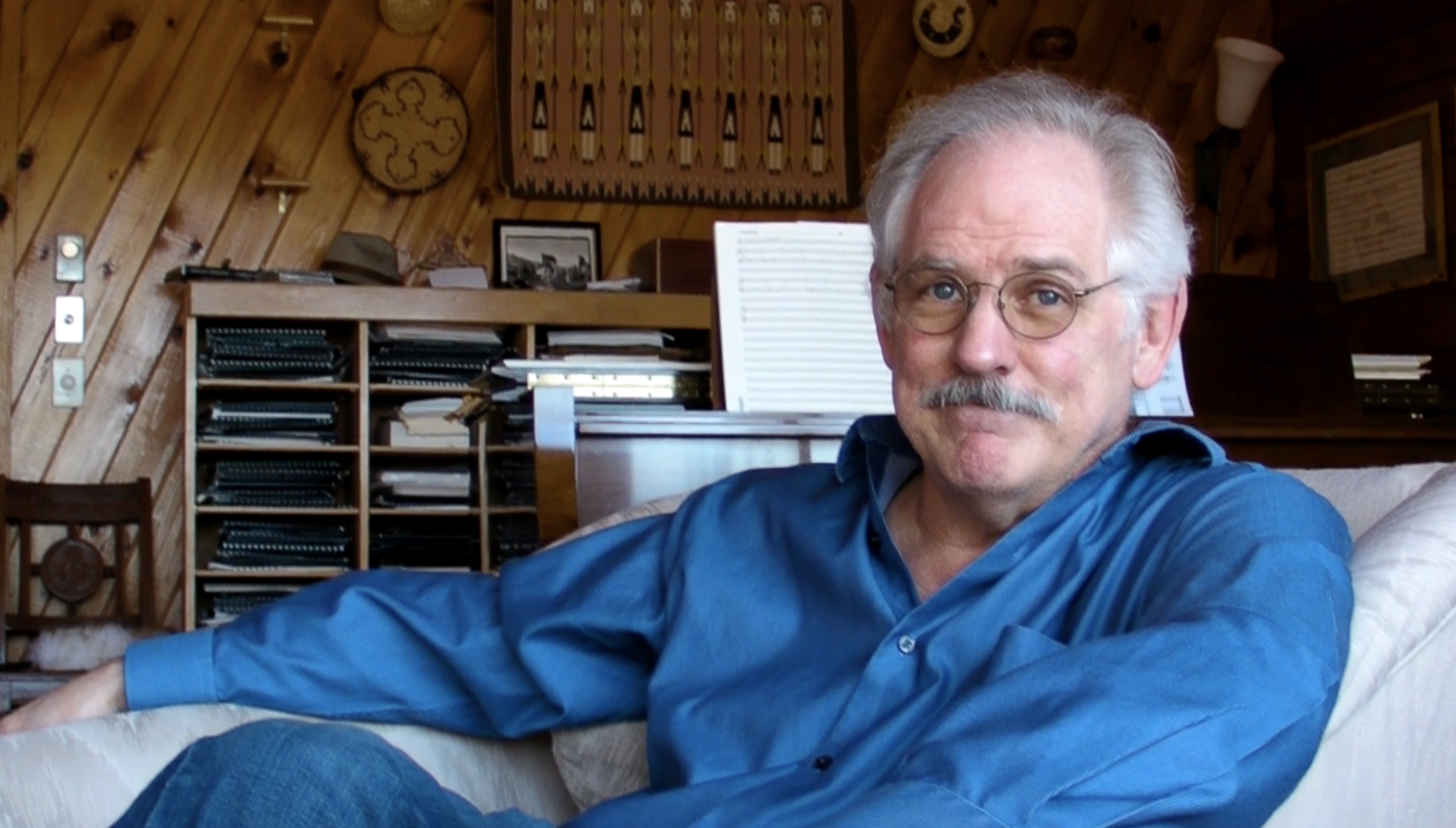
As a long-time microtonalist, I’ve always wanted to write something for the Harry Partch instruments, so I am extremely grateful to John Schneider for offering me the chance. My idea was to prove, or perhaps I should say test, the universality of Partch’s ensemble by trying to write in a style that didn’t sound like Partch. Accordingly, I concentrated on the microtonal relationships among the various harmonies, and had to wrestle with the fact that not all of his instruments had the same pitches. After fifty years of composing, I was made to feel like a rank amateur in this totally idiosyncratic environment, and as Partch inveighed against his performers looking like an “amateur California prune picker,” I thought I should embrace the title. Were I to attempt a second essay, I would probably surrender and write “à la Harry.” — K.G.
No recordings (yet…)
1. Samba—A DECENT AND HONORABLE MISTAKE
2. Heartbeat Rhythm—RHYTHM OF THE WOMB–MELODY OF THE GRAVE
3. Afro-Chinese Minuet—HAPPY BIRTHDAY TO YOU!
We begin this evening’s concert with the Three Dances that begin the third section of Partch’s Plectra & Percussion Dances (1952). The composer warned, “It’s an amazing fact that the world of dance music, and of Latin American dance music particularly, has produced an army of purists that is equal of anything that serious classical music can offer. I say this in order to advise you that the first scene, for example, “A Decent and Honorable Mistake,” may not be recognizable to you as a samba. The second scene, “Rhythm of the Womb, Melody of the Grave,” is based on a rhythmically contrapuntal heartbeat. The third scene, “Happy Birthday to You!” begins with an African-sounding marimba and somehow gets involved with a Chinese- sounding guitar in a pentatonic melody, and so I call it an Afro-Chinese Minuet.” This last dance ends with these directions: “Slowly enough that canon TRIADS are distinct,” after which they are to be played “faster than the previous runs so that the triads are NOT distinct.” The harmonies of each of those descending triads are wildly divergent, as if the composer is pausing to reminisce about various years past, but finally admits that as a 51-year old they are, in fact, a blur.
World Premiere by PARTCH Ensemble at REDCAT, June 2024
“Reið (Raidō) II is the sixth in a cycle of chamber pieces I have been composing for the last several years where each work is associated with a specific ancient Runic symbol. “Reið (Raidō)” directly translates to “ride” or “journey.” A journey on horseback is implied, but this can also be interpreted as an experience which connects this life with the afterlife, or this realm with other realms of existence or consciousness. The repetitive and percussive nature of a galloping horse is often further associated with shamanic drumming that accompanies certain primordial esoteric practices. In my work Reið (Raidō) there are 3 groupings of instruments and players, conveying three types of microtonal tunings: a Chromelodeon, tuned to a 43-note division of the octave based on ratios derived from just intonation; a piano and a harp whose standard equal temperament is tuned apart by the difference of a 7th partial of the overtone series, or approximately in equal tempered 1/6th tones; and 3 percussionists who play a variety of indefinite pitched or noise-based percussion instruments. In this dramatic representation of both an ancient and futuristic ritual, these various tunings and timbres are utilized through a carefully controlled harmonic, motivic, and formal personal language, that unifies structure and architecture with intensity and expression.”
— Jeffrey Holmes
This performance was made possible in part by a grant from the City of Los Angeles Department of Cultural Affairs.
This performance was also made possible in part by the Los Angeles County Board of Supervisors through the Department of Arts and Culture.
Performed by PARTCH Ensemble at REDCAT, June 2024
Progressions
In 1942, Harry Partch gave a lecture-demonstration at the Eastman School of Music in Rochester, N.Y. After introducing the now famous 43-note/octave scale on his newly created Chromolodian (sic), he proceeded to submerse the students in an extraordinary ear-bending sequence of chord Progressions Within One Octave that even today are capable of jarring the most seasoned Modernist sensibilities. Apologizing in advance that these auditory experiments, “…afford a little vision into a new world of musical resources—hardly more than a glimpse through a keyhole,” they turned out to be a peek into the future, as this music would soon become the opening of his Sonata Dementia (1949), exquisitely orchestrated with the addition of six newly built instruments. This performance was made possible in part by a grant from the City of Los Angeles Department of Cultural Affairs.
This performance was also made possible in part by the Los Angeles County Board of Supervisors through the Department of Arts and Culture.
Voices ~ Boo ~ Chromelodeon ~ Diamond Marimba ~ Surrogate Kithara
Program note by John Schneider:
The legendary 1969 Columbia recording of Barstow imprinted the work in the imaginations of a generation, and like US Highball that followed, it underwent numerous orchestrations. Hitchhiker graffiti is put to music, telling the tale of eight wanderers – some funny, some sad, but always engaging when seen through the lens of Partch’s re-telling. He gives us an earthy and poignant first-hand account that is unique in the world of music, one that is sure to become a permanent part of our American cultural landscape. Taken along with the rest of his Americana from the 1940’s, Partch has created a body of work that places him shoulder to shoulder with the two best-loved storytellers of the era, John Steinbeck and Woody Guthrie.
PARTCH Ensemble performing Harry Partch’s San Francisco—A setting of the cries of Two Newsboys on a Foggy Night in the Twenties at REDCAT on June 16-17, 2023.
“A collection of musical compositions based on the spoken and written words of hobos and other characters—the result of my wanderings in the Western part of the United States from 1935 to 1941.”
~ Harry Partch on The Wayward
Setting the gliding contours of real human voices had partly inspired Partch’s famed microtonal scale, and the opening viola lines of San Francisco do, in fact, wordlessly depict the curbside sales pitch with uncanny accuracy. So accurate, in fact, that when reviewing the 1944 Carnegie Hall premiere for the New York Tribune, Lou Harrison wrote, “Mr. Partch has woven a spell of about the foggiest and dampest music I have ever heard. I got homesick”.
Bass & Diamond Marimbas ~ Boo ~ BloBoy ~ Castor & Pollux Canons ~ Chromelodeon ~ Kithara II ~ Surrogate Kithara ~ Spoils of War
“A collection of musical compositions based on the spoken and written words of hobos and other characters—the result of my wanderings in the Western part of the United States from 1935 to 1941.”
~ Harry Partch on The Wayward
In 1957, Partch described this final version of U.S. Highball as, “…the most creative piece of music I ever wrote, and in the sense that it is less influenced by the forms and attitudes that I had grown up with as a child and experienced later in adult life, there can be no doubt of it.” The initial version was sketched out with guitar & solo voice, followed six months later by an expanded version for voice, guitar, kithara & chromelodeon. But he soon realized that the work really needed percussion instruments, and nine years later, he created the work you hear tonight. It describes his 1941 two-week freight-hopping, hitch-hiking & pot walloping journey from Carmel, California to Chicago in search of a new life and recognition of his music:
“It was the second day out of San Francisco that I began jotting down words in this notebook: fragments of conversations, remarks, writings on the sides of boxcars, signs in havens for derelicts, hitchhiker’s inscriptions, names of stations, thoughts…These fragments ARE the text of U.S. Highball… The work falls naturally into three parts: first, a long and jerky passage by drags to Little America, Wyoming: second, a slow dish-washing movement at Little America; third, a rhythmic allegro by highway to Chicago. The one word—Chicago—is the end of the text. Instrumentally, what follows implies a tremendous letdown from the obstinately compulsive exhilaration of getting to Chicago. It implies bewilderment, and that essentially dominant question in the life of the wanderer — what next?”
But the story doesn’t end there: following the 1958 release of the recording on Partch’s own Gate 5 label, he and filmmaker Madeline Tourtelot shot a studio performance of the work, and a decade later interspersed those black & white scenes with color footage of trains, roads, scenery traversed, and even abstract art. The 24-minute art house film still makes quite an impression, and is easily viewable online.
Live at REDCAT, June 16-17, 2023
Program note by Kyle Gann:
As a long-time microtonalist, I’ve always wanted to write something for the Harry Partch instruments, so I am extremely grateful to John Schneider for offering me the chance. My idea was to prove, or perhaps I should say test, the universality of Partch’s ensemble by trying to write in a style that didn’t sound like Partch. Accordingly, I concentrated on the microtonal relationships among the various harmonies, and had to wrestle with the fact that not all of his instruments had the same pitches. After fifty years of composing, I was made to feel like a rank amateur in this totally idiosyncratic environment, and as Partch inveighed against his performers looking like an “amateur California prune picker,” I thought I should embrace the title. Were I to attempt a second essay, I would probably surrender and write “à la Harry.” — K.G.
Live at REDCAT, June 4-5, 2021
Over the Edge of the World is a response to Partch’s own Ulysses at the Edge of the World, which i had been performing with the PARTCH ensemble several times. It poses the questions: what if Ulysses actually did go over the edge of the world? What would he have found there? At the moment the edge of the world is being researched in string theory and seems to lead into 11 dimensions. But how does traveling in 11 dimensions feel? On a technical side: the piece uses an 11-limit C-minor scale. Each of the three instruments follow its own structure, being a subset of the overall structure of the piece, using a slightly different version of this C-minor scale.
Mount San Antonio 1944 is inspired by a text written by Dale F. Stewart on June 27, 1944, in a notebook found at the peak of Mt. San Antonio (AKA Mt. Baldy). Stewart was at Caltech that year, and Caltech was heavily involved in the USA’s war efforts in both Europe and the Pacific. US troops had landed at Normandy only three weeks prior, and the US military would detonate atomic bombs over Hiroshima and Nagasaki about one year later (several key Manhattan Project personnel were from Caltech). Meanwhile, JPL co-founder Jack Parsons would soon leave the institution – due in part to his devotion to occultist (and mountaineer) Aleister Crowley and budding friendship with Scientology founder L. Ron Hubbard. All of this is to say that there was probably a lot on Dale F. Stewart’s mind as he surveyed the vistas from Mount San Antonio.
“Double Helix,” a scene from the opera LSD: Huxley’s Last Trip, depicts Francis Crick and James Watson celebrating their discovery of DNA at the Eagle Pub in Cambridge, England. Crick reveals that while under the influence of LSD, he visualized the double helix structure for the first time. Patrons at the bar comment on his revelation, while LSD hovers in the background.
In LSD: Huxley’s Last Trip, iconic figures such as Aldous Huxley, Albert Hofmann, Timothy Leary, and JFK’s mistress Mary Meyer, along with the CIA’s MK-ULTRA program, represent the powerful cultural, political, and spiritual forces set into motion by Albert Hofmann’s discovery of lysergic acid diethylamide. LSD was subsequently appropriated for nefarious uses by government agencies and psychopaths, while simultaneously extolled for its powers of illumination by writers and spiritual leaders. Practically half a century had to pass before the value of psychedelics as therapeutic agents in medical and psychiatric settings began to gain traction and respect.
This opera is currently in development, with initial support from Opera America’s Discovery Grant. Additional excerpts from the opera have been performed with the PARTCH Ensemble at REDCAT, the Wallis Annenberg Theater, and the Schindler House. The libretto is by Gerd Stern, Edward Rosenfeld, and Anne LeBaron.
Music by Harry Partch (1901-1974)
Final two paragraph’s of Thomas Wolfe’s “God’s Lonely Man.”
Performers:
Alison Bjorkedal – Kithara I
Vicki Ray – Chromolodeon
Derek Stein – Adapted Viola
T.J. Troy – Bass Marimba and Voice
Video captured and edited by Video Angel Productions
Audio recorded by Chris Votek
Presented by Jacaranda Music Series, First Presbyterian Church, Santa Monica, CA, November 9, 2019.
by PRISM Quartet and Sō Percussion
Music for Saxophones, Percussion and Harry Partch Instruments
Continue reading “Color Theory (2017)”Color Theory Concert: PRISM Quartet and Partch
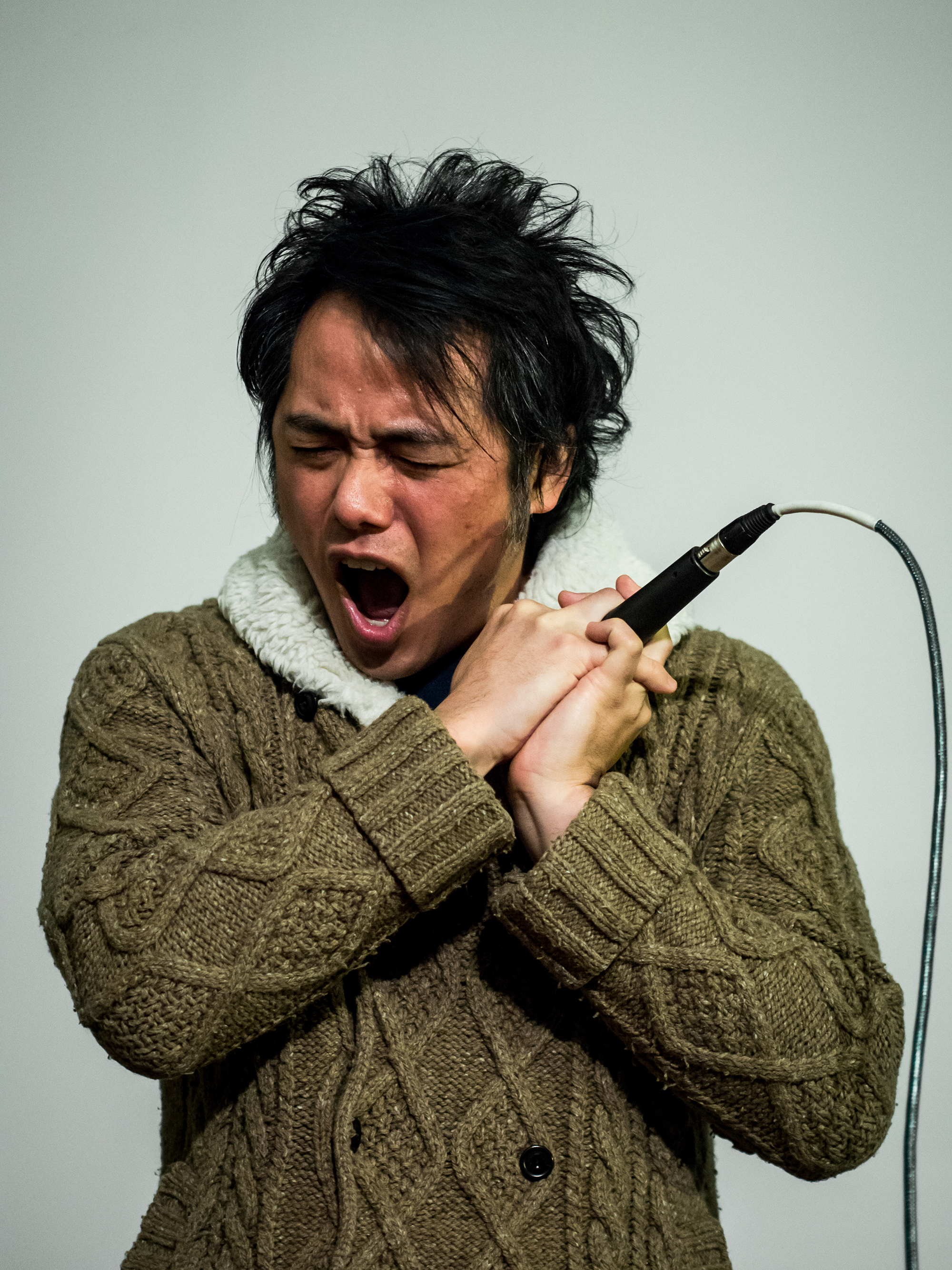
Ken Ueno: My work, “Future Lilacs,” metaphorically connects to color theory in blending different temperaments. It is the scientific reduction of sounds to a common denominator (thinking in terms of frequencies rather than scales) that helps me with this approach, which I consider a Newtonian way of rationalizing the ineffable.
June 12, 2016
Co-Presented by PRISM Quartet and Roulette
John Schneider introduces PARTCH Ensemble’s instruments to USC students.