Press for The Wayward album

“It is hard to imagine this being done better and this series effectively situates Partch not simply as the obscure outsider experimentalist, but as a unique artist whose work informs and inspires the next generation of composers and performers.”

Allan J. Cronin, New Music Buff

“Glorious disc…Instrumental performances throughout the record are precise and richly musical, while the vocal lines, which often teeter between the spoken and the sung, are delivered with terrific charm. It is a pleasure indeed to encounter music so alive with imagination and performed with such poise.”

★★★★★

— Kate Wakeling, BBC Music

“We’ll stay with “classical music” and also a bit with Castor and Pollux, but jump forward 200 years. In the early 1940s, US avant-garde artist Harry Partch wrote a collection of songs for baritone, bass, and orchestra, which he subtitled “A collection of musical compositions based on the spoken and written words of hobos and other characters – the result of my wanderings in the western part of the United States from 1935-1941” and revised several times over the next 25 years. “The Wayward” (Bridge) is advertised by the label as the “first complete recording” – we hear peculiar spoken-word chants set to radical acoustic guitar accompaniment. Furthermore, Partch was a great instrument inventor; he simply created the tools for his sound concepts himself. Whether only replicas or also Partch originals were used here is beyond my knowledge, but the exotic sonic richness of the “Chromelodeon,” “Cloud Chamber Bowl,” “Diamond Marimba,” or “Surrogate Kithara,” often zither- or xylophone-like structures, alone makes this music special. Some pieces (e.g., “US Highball”) sound like an anticipated musical/Hollywood parody with magnificent tenor blaring, and “Ulysses at the Edge” is included as an encore in an “improv version” with magnificent trumpet lines. Oh yes, “The Wayward” has something to do with Castor and Pollux in that the “Castor & Pollux Canons” are also part of the instrumentation.”  

— Karsten Zimalla, WESTZEIT
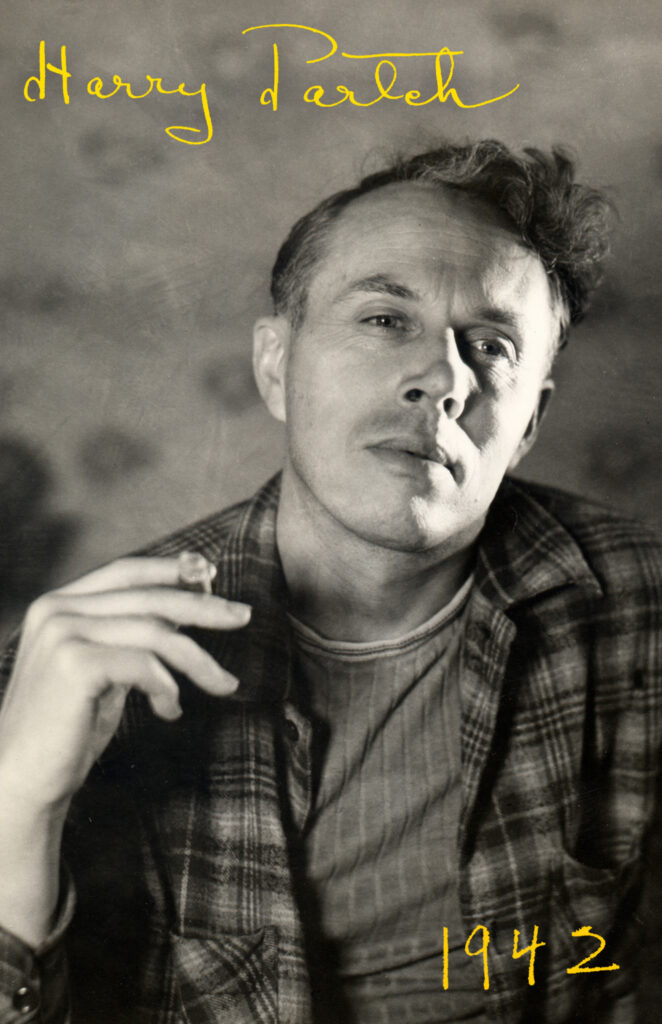

Press for Partch 1942 (2022)

“This hour with the master sheds light on his theories, his art, and his genius…It is a beautifully conceived and executed release…a valuable historic artifact and a “fetish level” collectible…(Of course you can get the excellent recording and the texts, learned liner notes, and historical photos on a pdf file, the recording on a digital file, but collectors will long cherish this museum quality document. Suffice it to say that some of my Christmas shopping is done now.)

…So whether you just want to hear the performance or want to own this objet d’art in all its glory this is a fine way to introduce yourself or a friend to this unique American genius.”

— New Music Buff 

Harry Partch, 1942 provides a wealth of material that illuminates an active and highly developed intellect that will cause even the most doubtful listener to reconsider the value of his work… a brilliantly organized portrait of the events in a critical year for Harry Partch – and for new music in general. This handsome book, with its meticulously engineered CD, belongs on the bookshelf of anyone who is studying or working in alternate tuning.

— Sequenza 21

“A real gem…”

— New Music Buff

“Stunning…when I got to the end of the CD and picked my jaw up off the floor…it sounds like something Tom Waits might have performed at a late night dive bar open mic on a snowy Tuesday night in December.”

 Audiophile

“Now, this priceless recording, its sound brushed up into its Sunday best, is where it belongs – before the public…It’s so much sheer fun that you’ll want to keep coming back to it.” 

 Music Web International

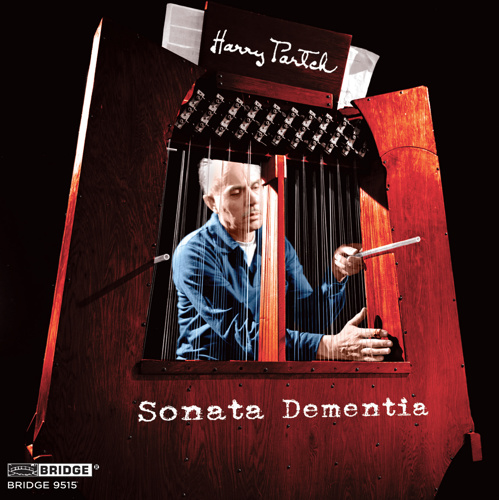
Album Reviews of Sonata Dementia (2019)

“…done…with a brand of reverence, scholarship, and quality of both recording and performances such that this is a collector’s dream and a major contribution to the history of microtonal musics and American music in general.”

– Allan Cronin, New Music Buff

“…impressively played album…”

– Andrew Clements, The Guardian

“…twangs and boogies and galumphs and goes bump in the night, punctuated by vocal interjections of enigmatic import. A bouncy but entrancing ride.”

– Matthew Gurewitsch, beyondcriticism.com

“The ensemble PARTCH…has made it a habit to unlock the mysteries and sounds of its namesake composer…his creations really require a new vocabulary. The members of PARTCH certainly speak it, whatever “it” may be.”

– infodad.com

“…the group PARTCH does a wonderful job of capturing both the letter and the spirit of [Harry Partch’s] music.

– Lynn Rene Bayley, The Art Music Lounge

“To Partch aficionados this disc will be an essential purchase…”

– Paul Serotsky, Musicweb International

The ensemble PARTCH is as true to the letter and spirit of Partch’s music as his own groups, and John Schneider’s intoned vocals even sound like Partch.

Stuart Broomer, The Whole Note

Step into the inventive imagination of Harry Partch, where unusual instruments and unexpected ideas thrive. The performances are direct.

BBC Music Magazine

There is a uniquely American sensibility at work

– ICON Magazine

Press for Enclosure VIII (2007)

The real fun begins, however, with “U. S. Highball,” which, along with “Barstow,” is a “hobo” composition. The film alternates between the ensemble performing the composition and footage of the sorts of freight trains and railroad yards around which hobo life and transportation were based. I have now seen this film several times and have no qualms about saying how exhilarating I find each viewing.

– Stephen Smoliar, The Rehearsal Studio

It’s some of the best introductory material… Anyone interested in the American avant-garde will appreciate this.

– Steve Smoltje, Big Takeover